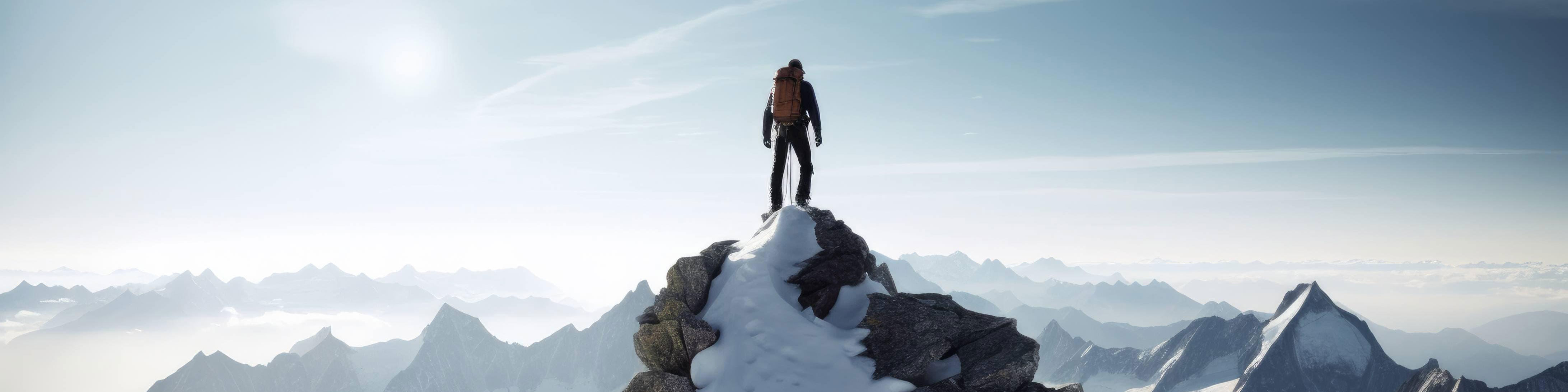

Where the Air Grows Thin and the Spirit Rises

Unraveling the Quiet Majesty and Mental Resolve of Mountaineering
The Pull of the Summit
There is something ancient about the way mountains call to us. The sound is not carried by wind or echo but by memory, as if every ridge and glacier remembers the footsteps of those who dared to climb before. Mountaineering is not simply a sport or a test of strength. It is a dialogue with the earth, a conversation between what is seen and what is felt. The first step up a steep incline always feels uncertain, yet it holds the promise of transformation. Every climber who looks toward a peak is searching for something far greater than elevation. They are seeking clarity that only comes when the air begins to thin and the mind is stripped of noise.
To climb is to simplify. The mountain removes the distractions of comfort and control, forcing the climber to face both nature and self in their rawest forms. The slope teaches patience. The cold teaches humility. The constant movement upward teaches respect for the invisible balance that exists between persistence and surrender. Even before the summit is reached, the mountain has already begun its quiet work of reshaping those who dare to step upon its path.
The Dance Between Risk and Reward
Every mountaineer knows that beauty and danger are inseparable companions. The same glittering ice that catches the sunlight can conceal a crevasse deep enough to swallow an entire team. Each sound of cracking snow is both warning and music. This delicate relationship between risk and reward defines the culture of mountaineering. It is not recklessness that drives climbers upward, but an awareness sharpened by respect. To ignore risk would be to dishonor the mountain, yet to fear it entirely would be to forfeit the experience of living fully.
Preparation becomes an art. Routes are studied, conditions are monitored, and every piece of equipment must earn its place. A rope is not just a tool but a promise of trust. A carabiner is not just metal but a lifeline linking one human to another. Risk does not vanish even when the gear is perfect, but it becomes manageable through wisdom, skill, and composure. The mountain asks for no less than complete attention, and in return, it grants a kind of focus that everyday life rarely allows.
The Science of Survival in Thin Air
At high altitudes, the body enters a silent negotiation with nature. Every breath contains less oxygen, and the heart begins to work harder to keep the blood alive. Mountaineers quickly learn that climbing is as much a biological test as it is a physical one. Acclimatization becomes a ritual, a gradual process of teaching the body to live where most life cannot. The science of altitude is complex, but its effect on the mind is even more profound. Thoughts slow, perception narrows, and even small tasks require deliberate effort. In this fragile environment, awareness replaces haste and mindfulness becomes a survival skill.
Food tastes different, rest feels deeper, and even fatigue acquires a strange kind of purity. Each moment is stripped to its essentials. The mountain gives no forgiveness for carelessness, yet it rewards respect with an overwhelming sense of belonging. The high places of the world do not welcome life easily, but those who adapt to them discover that endurance is not about conquering the mountain. It is about coexisting with it.
The Psychology of Height and Fear
The human mind is rarely still in the face of vastness. Looking down from thousands of feet above the earth changes something fundamental inside. Fear becomes a companion rather than an enemy. It humbles, it warns, and it sharpens perception. The fear of falling is not weakness but wisdom. It is the awareness that gravity is impartial and that courage exists only in the presence of risk. Experienced climbers speak of fear with reverence because it keeps them alive. They do not fight it. They learn to move with it, to let it teach caution without surrendering confidence.
Height also alters perspective beyond the physical. When the world stretches out below, problems that once felt heavy shrink in comparison. The mountain teaches proportion. It reminds us that we are temporary visitors, fragile yet capable of extraordinary endurance. Every climber who looks out over the horizon from a ledge or summit knows the mix of awe and insignificance that defines the true essence of mountaineering. It is not pride that fills the chest, but gratitude for being allowed, even briefly, to exist in such a place.
The Invisible Bonds of the Rope Team
Climbing alone may offer solitude, but climbing with a team reveals the quiet strength of trust. The rope that connects mountaineers is more than safety gear. It is a physical manifestation of unity. Each member’s movement affects the others, and every decision becomes collective. The rope team is an unspoken democracy where communication often happens without words. A tug of the line, a glance over the shoulder, a shared rhythm of breathing, these form the language of survival.
Mountaineers learn to rely on one another with an intimacy that few other experiences create. In the cold predawn hours, when visibility fades and the slope grows steep, the rope becomes both comfort and responsibility. To hold tension for a teammate who slips is to say without speaking, “You are not alone.” It is in these moments that the human spirit shows its capacity for quiet heroism. The summit may belong to the group, but the memories of that interdependence linger far longer than the view.
When Weather Becomes a Will
Weather is the most unpredictable partner in any ascent. The same sky that begins calm can shift into a storm without warning. Clouds roll in like curtains, and the wind transforms from whisper to force. A mountaineer’s relationship with weather is complex. It demands humility, observation, and intuition. No amount of strength can overpower a blizzard, and no degree of determination can negotiate with ice that has turned unstable. Wisdom lies in knowing when to advance and when to retreat. In this way, the mountain teaches patience through the language of weather.
Those who have faced sudden whiteouts or felt lightning crawl across a ridge know that survival often depends on the smallest decisions. Setting camp early, turning back before the storm, or waiting a few hours for better light can mean the difference between success and disaster. Weather turns every climb into a conversation between desire and restraint. To read the clouds correctly is not luck. It is respect for a force that existed long before climbers ever arrived and will remain long after they are gone.
The Summit and Its Shadows
Standing on a summit is unlike any other experience. The air is thinner, the silence heavier, and the horizon endless. Many climbers describe it as a moment of stillness that feels suspended outside of time. Yet the summit is only part of the story. The real test of mountaineering begins with the descent. The body is tired, the focus begins to waver, and the euphoria of success can easily turn into distraction. History remembers those who reached the top, but the mountain remembers those who made it back down.
The summit itself is a paradox. It offers the illusion of completion but represents only a pause before the return to ordinary ground. The view may be breathtaking, but what lingers most deeply is not what was seen, but what was endured. In that space between exhaustion and elation, mountaineers discover that victory is not about reaching the highest point. It is about carrying the lessons of that height back into life below.
The Legacy of the Climb
Mountaineering has always been shaped by those who dared to step where no paths existed. From early explorers who mapped the great ranges to modern climbers who scale walls of ice with precision, each generation adds a new chapter to the same ancient pursuit. What unites them all is not fame or conquest, but curiosity. Mountains invite wonder because they remind us that the world is still vast and that mystery still exists in its rawest form. The mountain does not change for us, yet we change entirely because of it.
Legacy in mountaineering is measured not in records but in reverence. The climber who teaches another how to tie a knot, the team that restores a damaged route, the storyteller who shares lessons from failure, all contribute to a collective wisdom that transcends altitude. The mountain becomes both teacher and archive, holding the invisible footprints of everyone who has passed. Each ascent adds another thread to a story that began long before and will continue as long as the peaks touch the sky.
Beyond the Summit Lies the Self
When the climb ends and the boots return to level ground, the mountain does not leave the climber. It lingers in posture, in patience, and in the quiet way the world is now seen. The lessons of height become part of daily life. Challenges seem smaller, choices feel clearer, and gratitude deepens. Mountaineering strips away illusion until all that remains is honesty, endurance, and awe. It teaches that greatness is not measured in elevation but in awareness. Every step upward is a return to something ancient within us, a reminder that even as the air grows thin, the spirit continues to rise. The true summit is not made of stone or snow but of understanding, and once reached, it never fades.